Website design and redesign
Your next website should match your next chapter.
WordPress website design for established businesses that have outgrown their current site. Our team connects your positioning, content, WordPress build, and customer journey in one practical plan.
Our team. Your next stage of growth. Based in Florida, working nationwide.

Built around the business
Show the quality before the first conversation.Explore the project
WordPress website design built around how customers choose.
Your customers arrive with a job to do. They need to understand what you offer, decide whether you can help, and find a sensible next step. A website that looks polished but makes those decisions difficult leaves useful opportunities unfinished. Our website design work begins with those decisions, then connects them to a clear page structure and a consistent visual direction.
We work with established service businesses whose experience has moved ahead of their website. You may have added services, expanded a territory, changed your ideal customer, or built a reputation that your online presence does not reflect. A redesign is an opportunity to make those changes understandable. It also needs to protect the useful content, URLs, and customer tools you already have.
Our team maps the main journeys before deciding how many pages to build. A person comparing your firm with two competitors needs evidence. A referred prospect may already trust your name and simply need to confirm your capabilities. An existing customer may need an account, a payment link, or support. Those visitors should each have a clear route without competing for attention on every screen.
Website design: what we plan together
- Your priority services, audience, and geographic reach.
- A sitemap that separates distinct offers without repeating the same page under different names.
- Content that explains scope, fit, proof, and the next step.
- Responsive layouts for desktop, tablet, and phone.
- WordPress editing needs, forms, and agreed integrations.
- A launch checklist covering search, redirects, customer journeys, and handover.
We can discuss Elementor when it fits the build and your team’s editing needs. Existing WordPress sites may use another builder or a custom theme. We review that starting point before recommending a change. The right editing system should help you maintain useful content without making everyday updates dependent on a full redesign.
Website design: a clear process, with decisions made in the right order.
1. Understand the business and the existing site
We review your services, customers, strongest work, and reasons people choose you. Then we inventory the current website: valuable landing pages, forms, integrations, downloads, commerce, and account access. If you have Search Console or analytics available, that evidence helps identify routes that deserve particular care. We do not assume the busiest page is the only page worth preserving.
2. Shape the content and design
We agree the structure and the key messages before extending a design across the site. Your strongest evidence belongs near the decision it supports. A technical service may need a detailed explanation and examples. A familiar repeat service may need clearer eligibility, location, and scheduling information. We use those differences to make the page useful, rather than filling every page with the same set of sections.
3. Build and test the customer journey
Our team builds the agreed pages and connections, then reviews the important journeys on different screen sizes. We check navigation, form delivery, links, image behavior, and the editing experience. Search preparation includes titles, descriptions, headings, index settings, internal links, and a redirect plan where URLs change. A checklist does not replace testing the actual customer path.
4. Prepare launch and the handover
Before launch we confirm who is responsible for domains, hosting, DNS, email, analytics, and third-party services. This prevents a website change from accidentally becoming an email or account-access problem. We also agree how your team will edit the site and where ongoing support starts. A useful handover includes responsibilities as well as instructions.
Website design: relevant work, explained in context.
Citrus Lighting’s website project illustrates how a lighting business can present its brand and online experience around its audience. The project preview keeps the brand and service presentation visible without forcing the design into a tight crop. A portfolio example can show design decisions, but it does not establish a revenue result without supporting evidence.
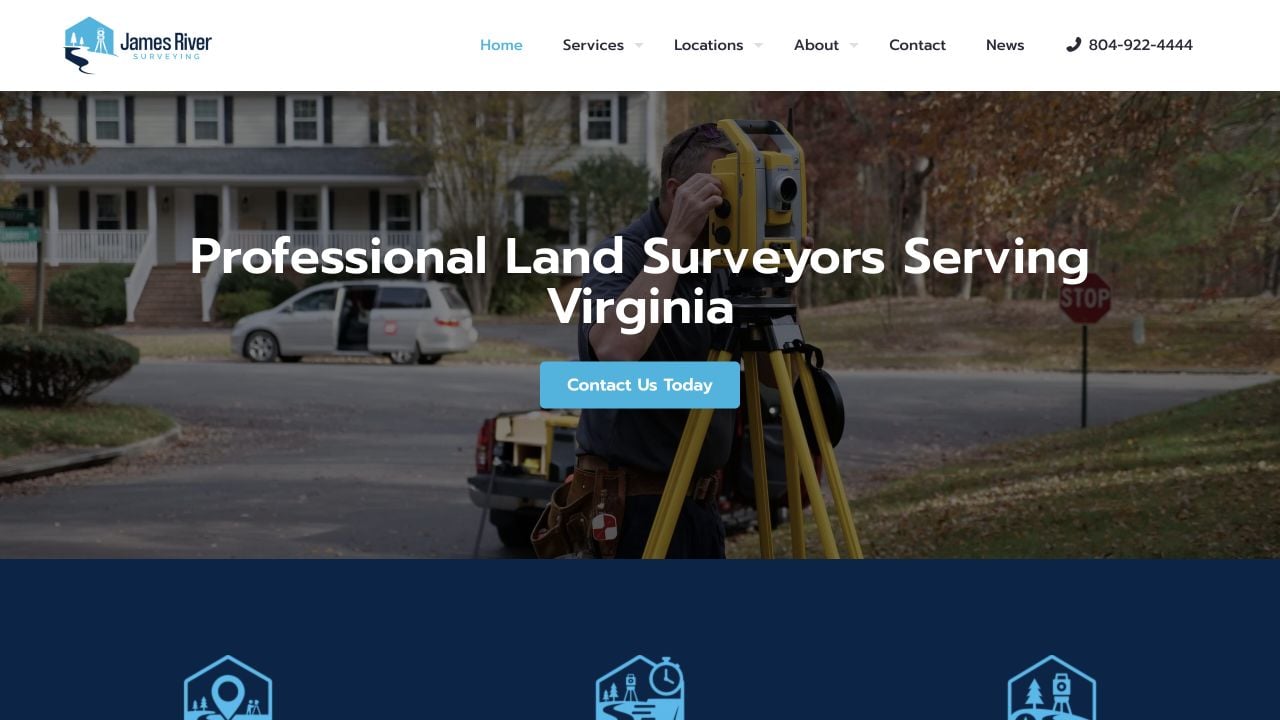
For an industry-specific example, explore our James River Surveying case study. The associated surveying offer explains how we approach service and territory structure for an established firm. The dated search snapshot distinguishes verified findings from unverified locations and separates Maps visibility from website visibility. We keep those boundaries visible because useful proof should help a buyer assess the work.
If you need a specialized offer, our land surveyor website design and realtor website design pages provide a more focused starting point. The core website design process remains connected to your actual services and customers. Industry experience helps us ask better questions; it does not mean every firm needs an identical site.
Website design: choose the scope before choosing a price.
Website investment depends on the amount of strategic work, content, design, functionality, and migration involved. A focused service website and a complex membership or commerce project require different work. We define the pages, responsibilities, connections, and launch needs in a written scope before treating a budget as final.
Our established surveying-firm website offer is positioned at $15,000 to $25,000. That range belongs to that offer, rather than serving as a universal quote for every industry. Ongoing marketing, paid services, subscriptions, and care are scoped separately when applicable. Tell us your priorities and constraints so we can discuss what belongs in the first release and what can follow.
A rebuild may be appropriate when the structure, editing system, or design is holding the business back across many pages. Targeted improvements may be more sensible when the foundation is healthy and the problem is limited to a few customer journeys. Our first job is to understand which situation you have. We can discuss SEO and AI search visibility, WooCommerce, or website care as connected work without assuming you need everything at once.
Before we start
Website design: questions worth asking.
Can website design protect existing search traffic?
We inventory existing URLs and search landing pages, preserve useful routes, and plan relevant redirects where changes are necessary. Migration work reduces avoidable risk, but no provider can promise unchanged rankings through every redesign.
Can our team edit the site after website design?
Yes, we agree the editing approach during planning. WordPress and Elementor may be appropriate, depending on the existing site and the work required. We include the editing and handover needs in the scope.
Is website design available nationwide?
Yes. Our team is based in Florida and works with businesses nationwide. We define the audience and service territory for the project rather than treating every business as a single-city offer.
Does website design include ongoing SEO?
Launch preparation and ongoing search work are different scopes. We explain the baseline checks included in the build and agree any continuing content, optimization, and reporting separately.
What should we bring to the first conversation?
Your current URL, priorities, important services, example projects, known integrations, and a realistic investment range are useful. You do not need to arrive with a finished sitemap.
What determines the website design timeline?
Scope, content readiness, integrations, feedback, and migration needs all affect timing. We agree milestones and responsibilities after reviewing the project, rather than promising the same schedule for every build.
Selected client work
Different businesses. Different customer journeys.
James River Surveying
Service and territory structure for a surveying firm.
Citrus Lighting
A specialist service business and its presentation.
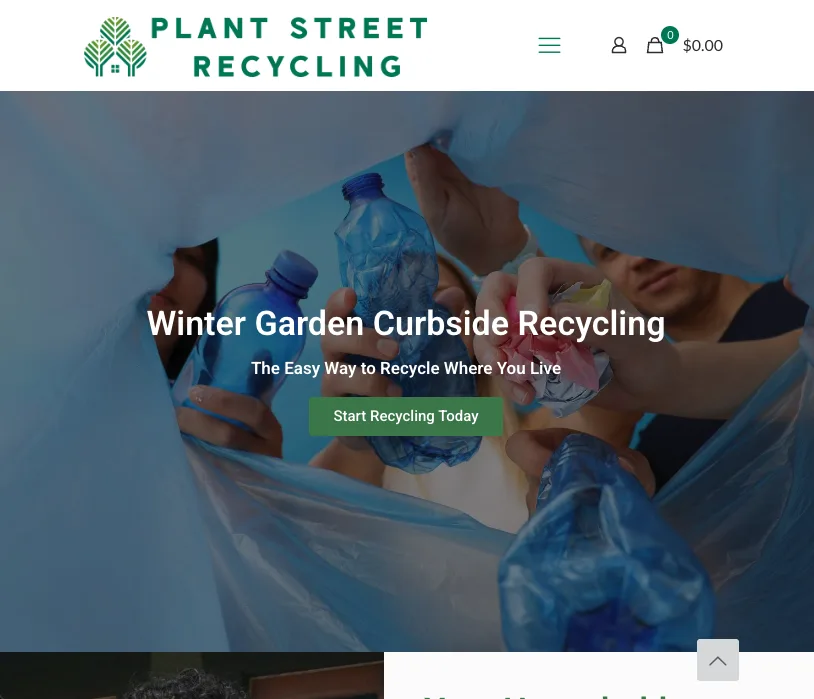
Plant Street Recycling
A service signup and customer journey.
Planning your project: a practical buyer’s guide
Plan website design around the decisions buyers make.
Website design: help a referred visitor confirm the recommendation
A referral gives your business an advantage, but the website still has work to do. A person who heard your name from a customer may be checking whether your team handles their particular service, project scale, or location. They should not have to interpret a vague headline or search through a gallery to discover what you actually do. A clear explanation, relevant example, and straightforward inquiry route help the recommendation become a useful conversation.
We look at what the referred visitor needs to confirm. That may include the types of clients you serve, qualifications your business can substantiate, the scope of a typical engagement, and who to contact. We avoid filling the page with claims that sound impressive but do not help someone choose. The strongest message is often a precise explanation of the work, supported by a project the buyer can recognize.
Website design: give a search visitor enough context to compare
A visitor who has never heard of your business needs a different level of orientation. The page should identify the service clearly, explain the problem it addresses, and show the next step. It may also need to answer practical questions about territory, process, and investment. Website design brings those answers together so the customer does not have to assemble them from disconnected pages.
We use the service structure to make comparison easier. When two offers solve genuinely different needs, each can deserve a substantial page. When several phrases describe the same offer, a single clear page can cover them naturally. This avoids making customers choose between near-identical pages and gives your team a more maintainable site. Search preparation follows the useful structure rather than driving unnecessary duplication.
Website design: make evidence specific enough to assess
A portfolio image can show visual quality. A case study can go further by explaining the starting problem, the decisions made, and the result that can actually be supported. We distinguish those roles. A screenshot does not prove an increase in sales. A ranking observation does not establish how many inquiries became customers. When measured results are available, we include the source, date, and limitations needed to understand them.
Your team may already have valuable evidence in proposals, project photographs, customer questions, or service explanations. We help identify what belongs on the website and what needs permission or further verification. Confidential work can sometimes be described at a suitable level, but we do not publish private client details simply to fill a case study. The evidence should serve the buyer and respect the relationship behind it.
Website design: choose calls to action that match the next step
Not every service can be bought in a single click. A complex project may need a conversation about scope, while a repeat service may have a defined booking or purchase path. We match the action to the offer and explain what happens next. A button labeled with the task is easier to understand than a generic invitation repeated throughout the site.
Forms should collect enough information to make the response useful without turning the first inquiry into a full proposal exercise. We review the fields, the confirmation message, and where the submission goes. If a customer needs to upload a document or provide sensitive information, that requires an appropriate approach. Website design includes the information flow around the form, not only the appearance of its fields.
Website design: protect the parts of the current website that matter
Before changing URLs or removing pages, we identify their role. A page may attract search visitors, appear in a customer email, support a sales conversation, or hold an important account link. Even a page with modest traffic can perform a valuable task. We review those connections so a cleaner sitemap does not create avoidable dead ends for customers or staff.
Where a URL changes, the redirect should lead to the closest useful destination. Sending every retired page to the homepage makes the mapping simpler for the implementer but often less useful for the visitor. We also review internal links and navigation so they point directly to the intended pages. The migration checklist becomes part of the build, rather than a repair project after launch.
Website design: plan content ownership before the handover
A website becomes harder to maintain when nobody knows who owns the information. We discuss who can approve service descriptions, supply project examples, review commercial details, and make routine edits. Those responsibilities affect the build schedule and the quality of future updates. Clear ownership also helps avoid a page remaining outdated because each person assumes another team member will change it.
The editing setup should reflect the actual work your staff will do. Someone updating project examples needs a consistent way to add images and descriptions. Someone changing service information needs layouts that tolerate realistic text lengths. We can discuss reusable patterns and training within the scope, so the site remains usable after the initial content has been entered.
Website design: review the experience beyond a desktop mockup
Mobile visitors may be reading between appointments, following a referral message, or checking a service from the field. The page should remain understandable at that size. We review heading wraps, image crops, navigation, spacing, and the location of the next action. A preview that looks elegant on desktop still needs to make sense when the columns become a single reading sequence.
Performance and accessibility also depend on implementation choices. Image dimensions, loading behavior, fonts, navigation controls, form labels, and meaningful link text all contribute to the experience. We use appropriate checks and review the real page. Automated scores are useful evidence for the areas they measure, but they do not replace reading the page or completing the customer journey.
Website design: bring a useful brief, even if the plan is not finished
You can start with the current website, a short description of what is changing, and the projects you want more of. Useful supporting information includes your main services, preferred customers, territory, important integrations, and a realistic investment range. It also helps to identify what currently frustrates your team or customers. Those details let us discuss priorities without asking you to design the solution first.
If you have existing brand guidance, approved photography, search reports, or customer questions, bring them into the planning conversation. We can identify what is ready to use and what needs development. A good first discussion should leave both teams clearer about the problem, the proposed scope, and the information still needed before a final proposal.
For a primary technical reference, see Google’s guidance on site moves with URL changes. We use relevant platform guidance alongside the needs of your business when planning a website redesign.
Website design also needs a clear definition of done. Before the build begins, we agree the pages, functionality, review stages, and launch responsibilities. That gives your team a concrete basis for feedback and helps our team distinguish a required correction from a new request. The aim is a complete first release with a practical handover, followed by separately agreed improvements where they are useful.
Website design: let’s plan the right next step.
Tell our team about your current website, your customers, and what needs to work better. We will help define a useful scope before you commit to a build.